Traditional spray painting relies on air pressure, resulting in overspray and poor adhesion. Electrostatic Painting charges the paint particles with 75,000 volts, causing them to magnetically "wrap" around the aluminum beams. This creates a factory-hard finish that lasts 3x longer than standard acrylic latex.
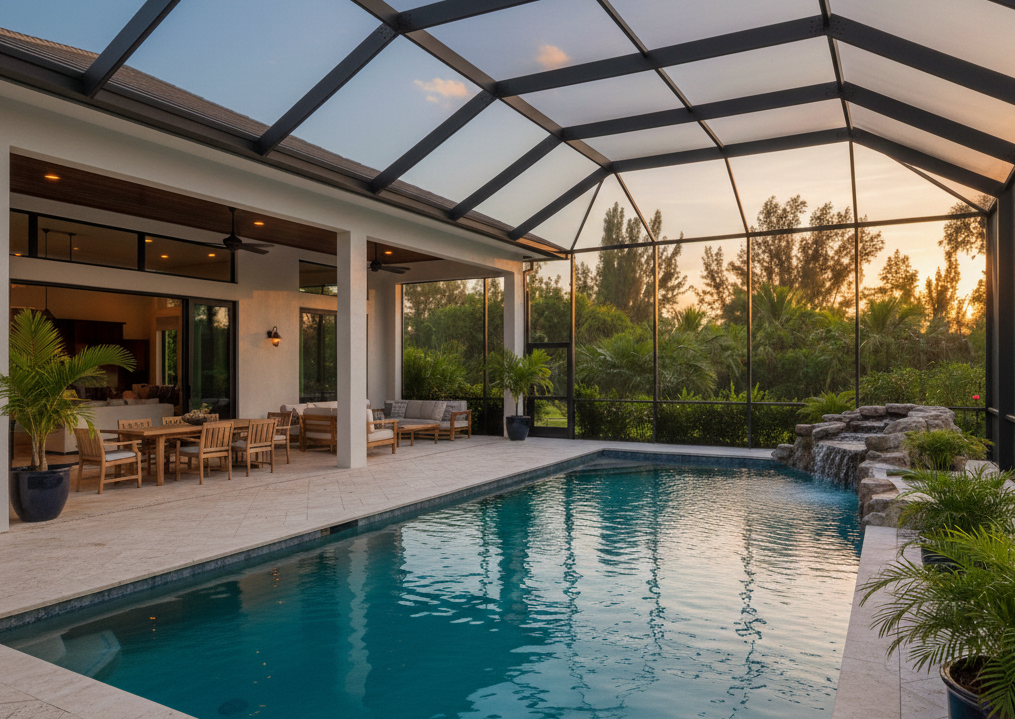
If you walk around any neighborhood in Tampa or St. Petersburg, you will see two types of pool cages. The first looks sleek, dark, and brand new. The second looks chalky, white, and has sheets of paint peeling off like a bad sunburn.
The difference isn't the age of the cage. The difference is the chemistry of the application.
At Suncoast Restoration, we often have to refuse jobs where a homeowner has previously attempted to "spray paint" their cage themselves. Once that improper layer fails, stripping it off becomes a nightmare. Here is why the industrial method is the only long-term solution.
1. The Chemistry: Latex vs. Urethane
Most house painters use "Direct-to-Metal" (DTM) latex paint. While this is fine for a metal front door that sits in the shade, it cannot withstand the UV Index of a Florida pool deck.
Aluminum expands and contracts in the heat. Latex paint becomes brittle over time. As the metal expands, the brittle paint cracks. Moisture gets underneath, and the peeling begins.
The Industrial Solution: We use a 2-Part Acrylic Urethane. This is the same class of chemical used on automotive exteriors. It remains flexible, allowing it to expand with the metal, and it contains high-grade UV inhibitors that prevent the color from fading to gray.
2. The Application: Magnetism vs. Air
The biggest risk in painting a pool cage is overspray. With a traditional air sprayer, only about 40% of the paint hits the metal. The other 60% drifts onto your pool deck, your water, and your neighbor’s roof.
How Electrostatic Works
Electrostatic painting uses physics, not just pressure. The spray gun charges the paint particles with a high-voltage negative charge. The aluminum cage is grounded.
Just like magnets, the negative paint is violently attracted to the grounded metal. The paint doesn't just hit the front of the beam; it wraps around to coat the back side as well. This results in a transfer efficiency of over 95%, meaning virtually zero overspray.
Comparison: The breakdown
| Feature | Traditional Spray | Electrostatic |
|---|---|---|
| Transfer Efficiency | 40% (High Waste) | 98% (Magnetic Bond) |
| Finish Quality | Uneven / Drips | Factory Smooth |
| Overspray Risk | High | Near Zero |
| Life Expectancy | 2-3 Years | 10-12 Years |
3. The Hidden Step: Preparation
You can use the best paint in the world, but if you apply it over oxidation, it will fail. Aluminum oxidizes, creating a chalky white powder. Paint cannot stick to chalk.
Before we ever open a paint can, our teams perform a rigorous prep process:
- Power Wash: Removal of mold, algae, and loose dirt.
- Hand Sanding: We scuff the beams to create a "mechanical tooth" for the new coating to bite into.
- Solvent Wipe: A final chemical clean to remove oils (suntan lotion, BBQ grease) that repel paint.
Can I Change The Color?
Absolutely. The most common request we get in 2026 is converting "White" cages (which show dirt and mold easily) to Bronze or Black.
Darker colors actually make the cage structure "disappear" visually against the landscape, enhancing your view of the outdoors. Because we use industrial urethane, the dark color will hold its depth and sheen for a decade without fading.
Ready to restore your cage correctly? Do it once, do it right. Contact our team for a remote assessment.